How to Keep Lingering Odor Out of Clothes and Bedding

Key takeaways
- Body odor compounds build up in fabric, and polyester releases them less easily than cotton.
- Wash sheets and pillowcases weekly, on the warmest setting the care label allows.
- Choose cotton for items worn close to the skin, like sleepwear and undershirts.
- Fresh fabrics and a thorough body wash work best together.
For many people, the first hint of age-related odor is not on their skin at all. It is a pillowcase that does not smell fresh, a shirt collar at the end of the day, or a sweater pulled from the closet. Fabrics are very good at holding on to scent, which is why a laundry routine matters as much as a shower routine.
Why fabrics hold on to odor
Skin constantly sheds oils, sweat and skin cells onto whatever touches it. Over time, some of the compounds from those oils oxidize and build up in the fibers. Age-related odor is linked to compounds that form from skin oils, such as 2-nonenal, so the areas that touch oil-rich skin, like collars, pillowcases and the backs of shirts, tend to show it first.
Did you know?
Skin keeps producing oils overnight, and they transfer to your pillowcase. That is why it can smell stale even if you shower at night.
Polyester vs. cotton
A 2020 study from the University of Alberta, published in the Textile Research Journal, compared how cotton and polyester fabrics take up and release odor compounds over repeated wear-and-wash cycles. Polyester absorbed more odorants and released less of them in the wash. Laundering removed odor compounds more effectively from cotton. The researchers found that buildup leveled off after about five to ten wash cycles, which means an older polyester shirt can carry a background scent that washing alone does not clear.
Polyester is oil-loving and water-repelling, so it tends to hold on to skin oils, while water-loving cotton lets go of them more easily in the wash.

A simple laundry routine
Bedding
- Wash sheets and pillowcases weekly. The Sleep Foundation recommends washing sheets once a week, since bedding collects sweat, body oils and dead skin cells.
- Use the warmest water the label allows. Cotton can usually handle hot water, while polyester and blends are better on warm.
- Keep spare pillowcases. Swapping a pillowcase midweek is an easy step if you notice it first.
Fabrics are very good at holding on to scent, which is why a laundry routine matters as much as a shower routine.
Clothing
- Wash close-fitting tops after each wear. Undershirts, sleepwear and workout tops sit directly on oily areas like the neck and back.
- Favor cotton next to the skin. Save synthetics for outer layers where possible.
- Give collars extra attention. Rub a little detergent into collars and necklines before washing.
- Air items out. Let worn clothing breathe before it goes back in a drawer or hamper.
- Retire tired synthetics. If an older polyester shirt smells stale even straight from the wash, odor may be built into the fibers.
Start with the skin
Laundry handles what has already transferred to fabric. To reduce what reaches fabric in the first place, wash oil-rich areas thoroughly: the back, chest, neck and behind the ears. Our shower routine for skin after 40 walks through it step by step.

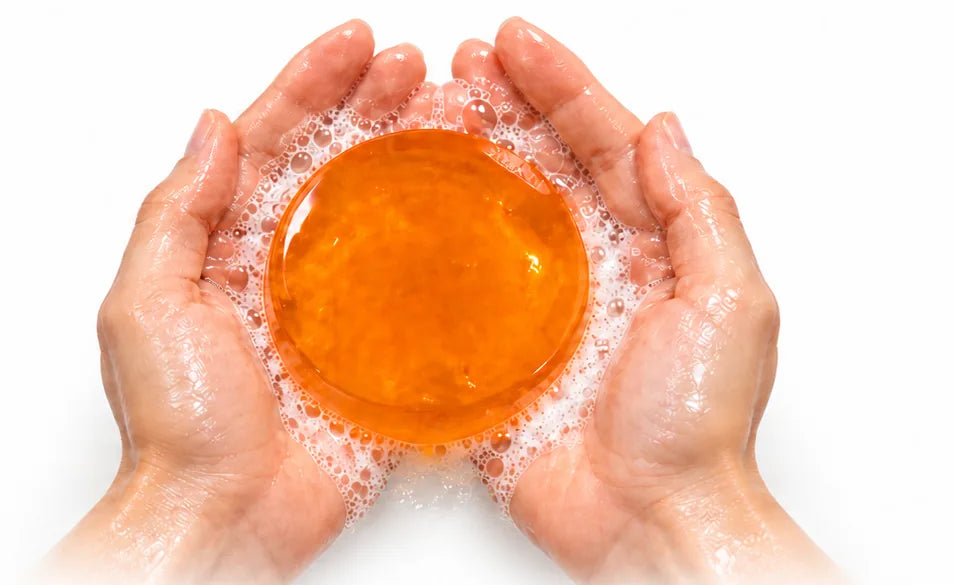
We designed the Persimmon Body Bar to wash skin oils away with persimmon extract and green tea. It is a cosmetic soap with a 60-day money-back guarantee.
Try this week
- Swap your pillowcase midweek.
- Rub a little detergent into collars and necklines before washing.
- Choose cotton for sleepwear and undershirts.
Frequently asked questions
Why does my pillowcase smell even though I shower at night?
Skin keeps producing oils overnight, and they transfer to the pillowcase. Washing pillowcases weekly, or swapping them midweek, keeps them fresh.
Is polyester bad for body odor?
Research shows polyester holds on to odor compounds more than cotton and releases less of them in the wash. It is fine for outer layers, but cotton is a better choice next to the skin.
Should I use hot water for everything?
Use the warmest water the care label allows. Cotton usually handles hot water, while polyester and blends are better washed warm.
Sources
- Abdul-Bari MM, McQueen RH, de la Mata AP, Harynuk JJ, Batcheller JC. Retention and release of odorants in cotton and polyester fabrics following multiple soil/wash procedures. Textile Research Journal. 2020;90(19-20):2212-2222.
- Sleep Foundation. How often should you wash your sheets?
- Haze S, et al. 2-Nonenal newly found in human body odor tends to increase with aging. Journal of Investigative Dermatology. 2001;116(4):520-524.