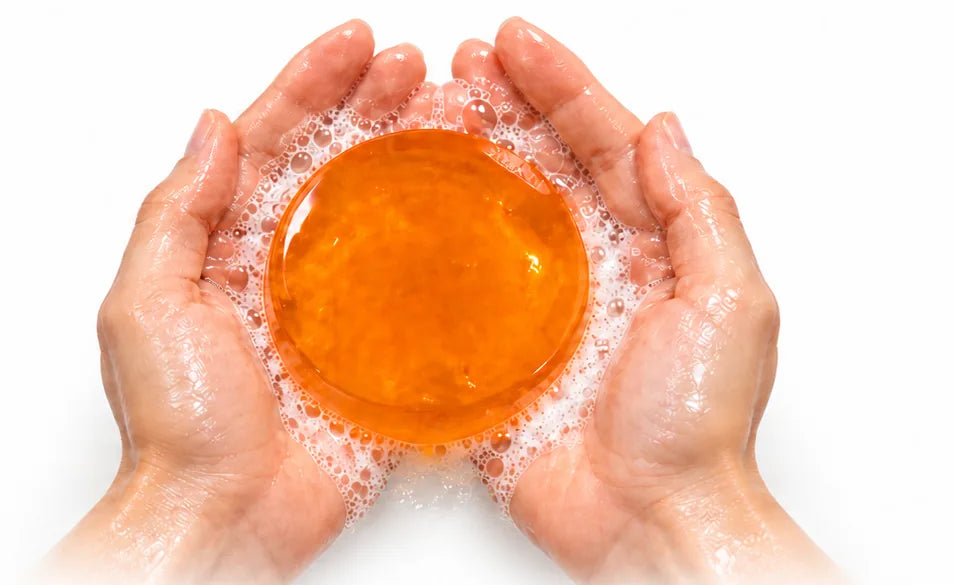
Bar Soap vs. Body Wash: Which Is Better for Your Skin?

Key takeaways
- Both clean well. The formula matters more than the format.
- Traditional soap is alkaline, while many body washes use milder synthetic cleansers. Gentle cleansing matters more as skin gets drier with age.
- Used bars carry some bacteria, but research found they are unlikely to transfer it to your hands.
- Look for moisturizing ingredients, a scent level that suits you and a texture you enjoy using every day.
Bar soap or body wash? Most of us use whatever we grew up with. Yet as skin changes after 40, it is worth knowing what actually separates the two, and what does not. Here is what the research says about cleansing, pH, hygiene and dry skin.
How each one cleans
All cleansers rely on surfactants, molecules that lift oil and dirt so water can rinse them away. True soap is made by combining fats or oils with an alkali, and it is naturally alkaline. Many body washes, and some bars, use synthetic detergents known as syndets, which can be formulated closer to the skin's own pH.
Did you know?
A large part of the environmental impact of washing comes from the shower itself, mainly from heating the water.
As Ananthapadmanabhan and colleagues explain, cleansers differ in how much they disturb the skin barrier, and milder formulas aim to clean while leaving more of the skin's own lipids and proteins in place. That difference exists within both formats. A harsh body wash and a gentle bar are both possible.

What about pH?
The skin's surface is slightly acidic. Lambers and colleagues found that natural skin surface pH averages below 5, at around 4.7, and that washing with soap, and even with tap water, raises it for a while. A slightly acidic surface suits the skin's resident flora.
For most people, the practical takeaway is to cleanse gently and moisturize afterwards, especially if your skin is dry or easily irritated.
Is bar soap unhygienic?
Used bars do carry bacteria. In a 1984 study, McBride found that most samples from in-use bar soaps were culture positive, compared with few samples from liquid soaps, although the bacterial levels were low compared with those found on hands.
To test whether that matters, Heinze and Yackovich loaded bars with bacteria at about 70 times the levels reported on used bars, then had 16 people wash their hands with them. None of the 16 had detectable levels of the test bacteria on their hands afterwards. The study was funded by a soap manufacturer, so it is worth reading with that in mind. A bar that dries out on a draining dish between uses is the simple, sensible approach.

Which suits drier skin after 40?
Dry skin becomes more common with age. In their review, White-Chu and Reddy describe it as common, and they point to humidity, bathing technique and emollients as the factors that make a difference.
The American Academy of Dermatology's advice applies to either format: keep showers to five to ten minutes in warm water, use a gentle cleanser, blot your skin dry and moisturize straight away. A bar or body wash with moisturizing ingredients such as glycerin and shea butter fits well into that routine.
The formula matters more than the format. A harsh body wash and a gentle bar are both possible.
What about the environment?
A large part of the environmental impact of washing comes from the shower itself, mainly from heating water. Comparing home-care and personal-hygiene products, Koehler and Wildbolz found that the use phase made up a substantial share of the footprint, and they recommended correct dosing and lower water temperatures. Whichever format you choose, shorter, cooler showers and using only as much product as you need make a real difference.
Try this in the shower
- Turn the water a notch cooler.
- Keep it to five to ten minutes.
- Use only as much product as you need.
How to choose
- Pick the one you will use thoroughly every day. Technique matters more than format.
- Check the ingredient list for moisturizing ingredients such as glycerin, shea butter or plant oils.
- Keep scent light if your skin is sensitive to fragrance.
- If you choose a bar, keep it on a dish that drains. See How to Make a Bar of Soap Last Longer.
- If several people share a shower, one bar each or a pump bottle keeps things simple.
We make both
Our Persimmon Body Bar is handmade with persimmon fruit extract and green tea leaf extract in a base of coconut oil, olive oil and shea butter, with glycerin, hyaluronic acid, vitamin E and hydrolyzed collagen. It is made without sulfates or parabens. If you prefer a liquid, we also make a Persimmon Shower Gel.
No soap is clinically proven to stop body odor, including ours. The Persimmon Body Bar comes with a 60-day money-back guarantee so you can judge it for yourself.
Frequently asked questions
Which is better for body odor, bar soap or body wash?
Neither format wins on its own. What matters is lathering the areas that sweat most, rinsing well and drying thoroughly. See How to Choose a Soap for Body Odor.
Is it unhygienic to share a bar of soap?
Research suggests used bars are unlikely to transfer bacteria to your hands. If you prefer, one bar per person on a draining dish is an easy habit.
Which lasts longer?
It depends on how you use and store it. A bar left in standing water wears down quickly, while a bar that dries between uses lasts much longer.
Sources
- Ananthapadmanabhan KP, et al. Cleansing without compromise: the impact of cleansers on the skin barrier and the technology of mild cleansing. Dermatologic Therapy. 2004;17(Suppl 1):16-25.
- Lambers H, et al. Natural skin surface pH is on average below 5, which is beneficial for its resident flora. International Journal of Cosmetic Science. 2006;28(5):359-370.
- McBride ME. Microbial flora of in-use soap products. Applied and Environmental Microbiology. 1984;48(2):338-341.
- Heinze JE, Yackovich F. Washing with contaminated bar soap is unlikely to transfer bacteria. Epidemiology and Infection. 1988;101(1):135-142.
- White-Chu EF, Reddy M. Dry skin in the elderly: complexities of a common problem. Clinics in Dermatology. 2011;29(1):37-42.
- Koehler A, Wildbolz C. Comparing the environmental footprints of home-care and personal-hygiene products: the relevance of different life-cycle phases. Environmental Science and Technology. 2009;43(22):8643-8651.
- American Academy of Dermatology. Dermatologists' top tips for relieving dry skin.