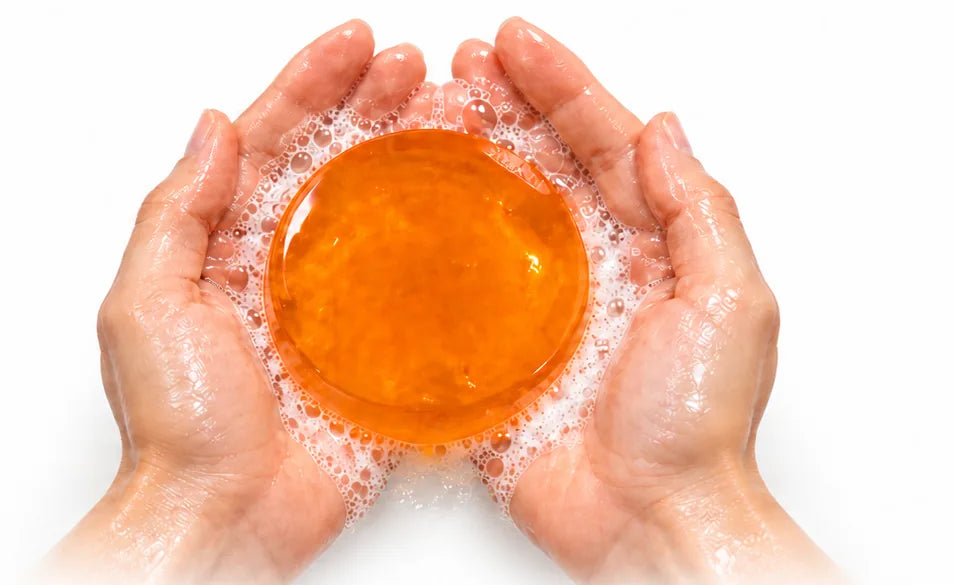
How to Make Bar Soap Last Longer: 8 Simple Habits

Key takeaways
- Water is what wears a bar down. Let it dry fully between uses.
- A soap dish that drains, placed out of the spray, makes the biggest difference.
- Work up a lather in your hands or on a cloth, then put the bar down.
- Keep spare bars somewhere cool and dry until you need them.
A bar of soap that sits in water softens, swells and washes away faster than it gets used. If yours turns soft within days, the fix is simple: keep it dry between showers. These eight habits help a bar keep its shape until the last sliver.
Did you know?
A soft bar can recover. Once it dries out between uses, it firms up again on the surface.
1. Use a soap dish that drains
A flat dish holds water under the bar. A slotted or raised design lets water run off and air reach the underside. Our bamboo soap dish has a slotted design for exactly this reason.
2. Keep it out of the spray
Even a good dish cannot keep up with a constant stream of water. Place it where the shower does not hit it directly.
Water is what wears a bar down. Let it dry fully between uses.
3. Let it dry completely
A bar that dries between uses firms up again on the surface. If you shower more than once a day, a second bar helps (see habit 6).
4. Lather in your hands or on a cloth
Rub the bar between wet hands or on a washcloth for a few seconds, then put it down and wash with the lather. The bar spends less time under running water, and you still reach every spot.

5. Cut it in half
A smaller piece means less surface exposed to water each time. Use one half while the other stays dry in a drawer.
6. Rotate two bars
Alternate between two bars so each one has a full day to dry out.
7. Store spares somewhere cool and dry
Keep bars you have not started yet out of the steam of the bathroom, in a drawer or cupboard. Our Persimmon Body Bar has a shelf life of three years, so keeping a few on hand is no problem.
8. Use up the last sliver
Press the small piece onto a new bar while both are damp, and they will usually stick together. You can also collect slivers in a soap saver pouch and use it to lather.
Why some bars soften faster
Bars differ. Clear glycerin soaps attract moisture from the air, so they tend to soften faster in a steamy bathroom. How warm and humid your bathroom is also plays a part.

Is it hygienic to keep using a bar?
Yes. Used bars do carry some bacteria, but McBride found the levels on in-use bars were low compared with those on the hands. In a test by Heinze and Yackovich, people who washed with heavily contaminated bars had no detectable test bacteria on their hands afterwards. A dish that drains keeps the bar drier and more pleasant to use.
Try this tonight
- Move the soap dish out of the spray.
- Cut your next bar in half and keep one half in a drawer.
- Press the last sliver onto a new bar while both are damp.
Wondering whether a bar is the right choice at all? Read Bar Soap vs. Body Wash.
How long a bar lasts depends on your water, your shower and how you store it, so we do not put a number on it. The Persimmon Body Bar is a 100 g handmade bar with a three-year shelf life and a 60-day money-back guarantee.
Frequently asked questions
Why does my soap get mushy?
It is sitting in water. A dish that drains and a spot out of the spray let it dry and firm up between uses.
Should I keep soap in the shower?
Yes, as long as it can dry. Keep it on a draining dish out of the direct spray, and store spare bars outside the bathroom.
Can I stock up on bar soap?
Yes. Kept somewhere cool and dry, bars keep well up to the shelf life on the pack. Ours has a shelf life of three years.
Sources
- McBride ME. Microbial flora of in-use soap products. Applied and Environmental Microbiology. 1984;48(2):338-341.
- Heinze JE, Yackovich F. Washing with contaminated bar soap is unlikely to transfer bacteria. Epidemiology and Infection. 1988;101(1):135-142.