Why Body Odor Changes After 40, and What Actually Helps

Key takeaways
- Midlife body odor often comes from changes in skin oils, not from sweat.
- It can appear even with a daily shower and is not a sign of poor hygiene.
- It tends to show up on the neck, chest, back and behind the ears, and it clings to fabric.
- A gentle, thorough wash, clean bedding and breathable fabrics help most.
Plenty of people in their 40s and 50s notice something new: a faint scent on a pillowcase, a collar that does not smell fresh by evening, or a comment from a partner. Your routine has not changed, so what has?
The short answer is skin chemistry. This article walks through the main changes, how this odor differs from ordinary sweat, and what actually helps.
Sweat odor and age-related odor are different
Classic body odor comes from sweat. Fresh sweat has very little smell. Odor develops when bacteria on the skin break down compounds in sweat, mostly in the underarms and feet. Deodorants and antiperspirants are designed for this.
Age-related odor works differently. It is linked to the oils on the skin surface rather than sweat, and it can come from areas with more oil glands, such as the back, chest, neck and behind the ears. That is why an underarm deodorant does not touch it.

What changes in skin after 40
Surface oils change
A 2001 study of 22 people aged 26 to 75 found that the amount of omega-7 fatty acids and lipid peroxides in skin surface oils increased with age. When those oils oxidize, they produce 2-nonenal, a compound with a greasy, grassy scent. In that study, 2-nonenal was found only in people aged 40 and over. Our full guide to 2-nonenal covers the science in more detail.
Other compounds shift too
Not every study finds 2-nonenal. A 2008 analysis of 25 adults found that nonanal, benzothiazole and dimethyl sulfone were higher on older skin. The overall picture is consistent: the mix of compounds your skin gives off changes as you age.
It is a normal part of aging and says nothing about how clean you are.
Your nose adapts
Most people cannot smell their own scent well because the nose tunes out familiar odors. That is why the first sign is often a pillowcase or a sweater rather than your skin.
Is it something to worry about?
No. It is a normal part of aging and says nothing about how clean you are. A 2012 blind study even found that body odor from people aged 75 to 95 was rated as less intense and less unpleasant than odor from younger groups. It is simply different, and people can tell.
If you notice a sudden or strong change in body odor along with other symptoms, it is worth mentioning to a doctor, since some health conditions and medications can affect scent.
Did you know?
Age-related changes in skin oils are not limited to one sex. The 2008 and 2012 studies in this article included both men and women.
What actually helps
1. Wash the right areas, gently
Because the odor is linked to skin oils, pay attention to oil-rich areas: the back, chest, neck and behind the ears. Use warm water rather than hot, and a gentle cleanser. Scrubbing harder is not the answer, since irritated skin is less comfortable and no fresher.
2. Choose a cleanser made for the job
Some cleansers include plant polyphenols such as persimmon tannins and green tea catechins. In lab studies, these have shown an ability to bind or react with odor compounds. You can read what the research does and does not show in Persimmon Tannins and Green Tea: What the Research Shows.
3. Keep fabrics fresh
Body odor compounds build up in fabric, especially synthetics. Washing pillowcases and sheets weekly and favoring cotton next to the skin both help. See How to Keep Lingering Odor Out of Clothes and Bedding.

4. Mind the everyday factors
In a small 2021 study, a high-fat diet and a stressful meeting both raised measured 2-nonenal on the skin. Balanced meals and a calmer day will not change your skin overnight, but they are part of the picture.
5. Give it time
Any change in routine takes a few weeks to judge fairly, especially when you cannot smell your own scent. Ask someone you trust, or notice whether your pillowcase smells fresher at the end of the week.
Try this for a few weeks
- Wash the back, chest, neck and behind the ears gently, in warm water.
- Wash pillowcases and sheets weekly.
- Favor cotton next to the skin.
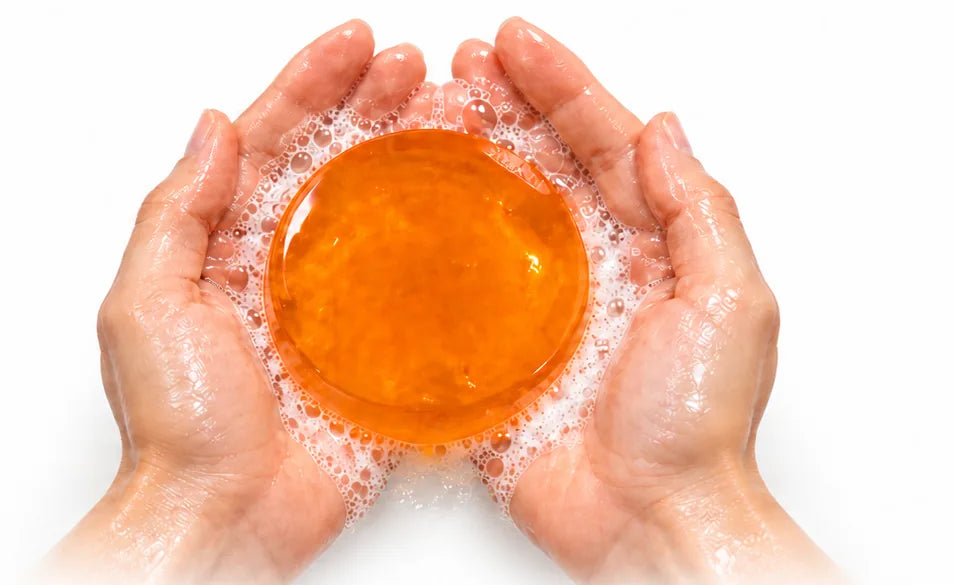
We made the Persimmon Body Bar for exactly this stage of life. It is a cosmetic soap, not a treatment, and it comes with a 60-day money-back guarantee.
Frequently asked questions
Why do I smell different after 40?
Skin oils change with age, and some of them break down into compounds with a distinct scent, such as 2-nonenal. This happens even with good hygiene.
Will deodorant help?
Deodorant targets underarm sweat odor. Age-related odor is linked to skin oils across the body, so a thorough body wash matters more.
Does it affect men and women?
Yes. The 2008 and 2012 studies mentioned here included both men and women, and age-related changes in skin oils are not limited to one sex.
Sources
- Haze S, et al. 2-Nonenal newly found in human body odor tends to increase with aging. Journal of Investigative Dermatology. 2001;116(4):520-524.
- Gallagher M, et al. Analyses of volatile organic compounds from human skin. British Journal of Dermatology. 2008;159(4):780-791.
- Mitro S, et al. The smell of age: perception and discrimination of body odors of different ages. PLoS ONE. 2012;7(5):e38110.
- Saito K, Tokorodani Y, Sakamoto C, Kataoka H. Headspace solid-phase microextraction/gas chromatography-mass spectrometry for the determination of 2-nonenal and its application to body odor analysis. Molecules. 2021;26(19):5739.
- Sleep Foundation. How often should you wash your sheets?