Kareishu: The Japanese Word for Age-Related Body Odor

Key takeaways
- Kareishu (加齢臭) combines karei, aging, and shū, odor.
- The word spread in Japan after Shiseido research into age-related body odor around the turn of the millennium.
- Researchers linked it to 2-nonenal, a compound with a greasy, grassy smell found in people aged 40 and over.
- It applies to men and women alike, and one study found odor from people aged 75 to 95 was rated less intense and less unpleasant.
Japanese has a single word for the subtle change in body scent that comes with age: kareishu. It is pronounced roughly kah-ray-shoo, and it names something that other languages tend to describe in long, awkward sentences, if at all.
What the word means
加齢臭 is written with three characters. 加齢 (karei) means aging, literally adding years, and 臭 (shū) means odor. Put together, kareishu means age-related odor.
Did you know?
Kareishu is not only a men's issue. Research measuring 2-nonenal at the back of the neck found that it increased with age in both men and women.
Where the term came from
The word is generally credited to the Japanese cosmetics company Shiseido. By 1999, the company was publicly discussing its research into how body odor changes with age, and in 2001 a team of its researchers led by Haze published the study behind it in the Journal of Investigative Dermatology. From there the word moved into everyday Japanese, and products for kareishu, persimmon soaps among them, became a familiar sight.
The science behind kareishu
Haze and colleagues analyzed body odor from people aged 26 to 75. They identified 2-nonenal, a compound with what they described as an unpleasant greasy and grassy odor, and detected it only in people aged 40 and over. It forms when certain fatty acids in skin oil break down through oxidation, and those fatty acids increased with age.
Later work broadened the picture. Gallagher and colleagues sampled skin on the upper back and forearm of 25 people and found that some of the volatile compounds they measured varied with age. For the full story, read What Is 2-Nonenal?
It is a normal part of aging, and it says nothing about how clean you are.
Is kareishu only a men's issue?
Kareishu is often talked about as something men experience, yet the research points to both sexes. Kimura and colleagues measured odor compounds at the nape of the neck, where oil and sweat glands are dense, and found that 2-nonenal increased with age in both men and women. They also measured diacetyl, another compound linked with body odor, which was highest among people in their 30s.

How others perceive it
In a study titled The Smell of Age, Mitro and colleagues asked people to rate body odor samples from three age groups. Odor from people aged 75 to 95 was rated less intense and less unpleasant than odor from the other groups, and participants could tell it apart. The scent of age, in other words, is distinct and by this measure mild.
Keeping it in check
- Wash oil-rich areas such as the nape, chest and back.
- Keep pillowcases and collars fresh.
- Choose breathable fabrics.
Persimmon and kareishu
Persimmon has a long history in Japan beyond the fruit bowl. Kakishibu, fermented persimmon juice, has been used for generations to dye and coat fabric, paper and wood. Its characteristic compounds are tannins, and in 1978 Matsuo and Ito described the chemical structure of kaki-tannin from unripe persimmon fruit.

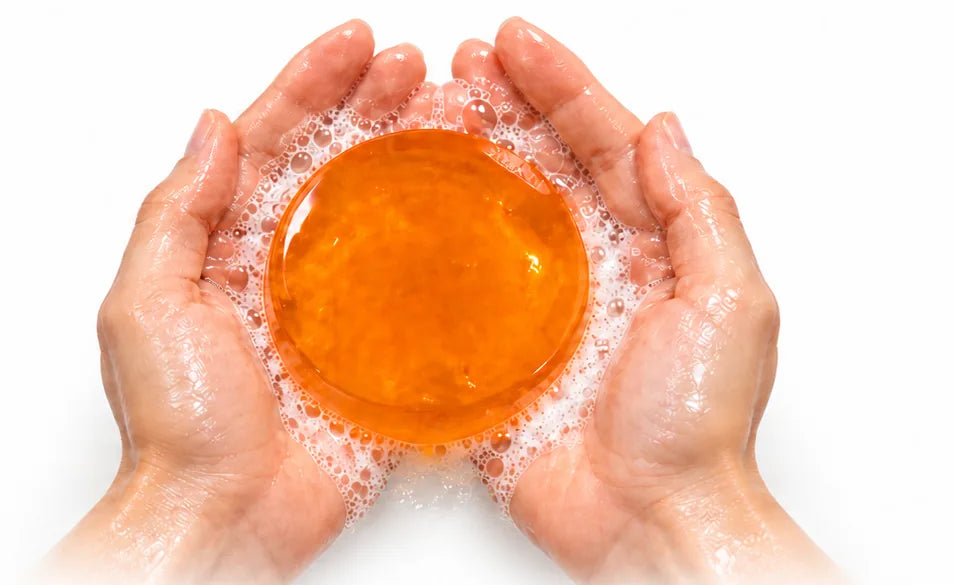
Persimmon tannins, along with green tea catechins, have been studied for how they interact with odor compounds, which is why persimmon became a familiar ingredient in Japanese soaps for kareishu. We explain the research in Persimmon Tannins and Green Tea and What Is Persimmon Soap?
Is kareishu a real thing?
Yes, in the sense that skin chemistry changes with age and some of those changes have a scent. It is a normal part of aging, and it says nothing about how clean you are. If you want to keep it in check, the basics are the same as for any body odor: wash oil-rich areas such as the nape, chest and back, keep pillowcases and collars fresh, and choose breathable fabrics. Our guide Why Body Odor Changes After 40 has more.
No soap is clinically proven to remove kareishu, including ours. The Persimmon Body Bar is a cosmetic soap with persimmon and green tea extracts, made to wash skin oils away, with a 60-day money-back guarantee so you can judge it for yourself.
Frequently asked questions
How do you pronounce kareishu?
Roughly kah-ray-shoo.
Do women get kareishu?
Yes. Research measuring 2-nonenal at the back of the neck found that it increased with age in both men and women.
At what age does kareishu start?
In Haze's study, 2-nonenal was found only in people aged 40 and over. Everyone is different, and factors such as diet and stress also play a part.
Sources
- Haze S, et al. 2-Nonenal newly found in human body odor tends to increase with aging. Journal of Investigative Dermatology. 2001;116(4):520-524.
- Gallagher M, et al. Analyses of volatile organic compounds from human skin. British Journal of Dermatology. 2008;159(4):780-791.
- Kimura K, et al. Measurement of 2-nonenal and diacetyl emanating from human skin surface employing passive flux sampler-GCMS system. Journal of Chromatography B. 2016;1028:181-185.
- Mitro S, et al. The smell of age: perception and discrimination of body odors of different ages. PLoS ONE. 2012;7(5):e38110.
- Matsuo T, Ito S. The chemical structure of kaki-tannin from immature fruit of the persimmon (Diospyros kaki L.). Agricultural and Biological Chemistry. 1978;42(9):1637-1643.
- Magnier M. Los Angeles Times, reprinted in The Seattle Times. July 19, 1999.
- Saito K, Tokorodani Y, Sakamoto C, Kataoka H. Headspace solid-phase microextraction/gas chromatography-mass spectrometry for the determination of 2-nonenal and its application to body odor analysis. Molecules. 2021;26(19):5739.