Why Do I Smell Even After Showering? 8 Common Reasons

Key takeaways
- Odor comes from skin bacteria breaking down sweat and oils, and they get back to work soon after you dry off.
- The usual culprits are missed spots, damp towels and clothes that hold on to odor.
- From around 40, skin oils change and can add a greasy, grassy note to the neck, back and pillowcases.
- A persistent fishy smell or very heavy sweating is worth checking with a doctor.
You showered this morning, yet by lunchtime you can smell yourself again. Or someone close to you mentions a smell you cannot detect at all. It is frustrating, and it is common. The reasons are usually simple, and most are easy to fix once you know where to look.
1. Bacteria get back to work quickly
Sweat and skin oils have little smell when they first reach the surface. As James and colleagues explain, odor forms when skin bacteria break those secretions down. A shower lowers the load, but skin is never sterile, and as soon as you start to sweat again the process restarts. That is normal, and it is why technique matters more than how many times a day you shower.
Did you know?
Your nose adapts to smells it meets all the time, including your own. That is why a partner or friend may notice a change before you do.
2. Some spots get missed
Water running over skin lifts very little oil. The places that need lather most are the ones that are easiest to skip:
- Underarms and groin. Harvard Health notes that short showers focused on these areas are enough for most people.
- The back of the neck and hairline. Researchers measuring age-related odor compounds sampled the nape because it has dense oil and sweat glands.
- Behind the ears.
- Under the breasts and in other skin folds.
- Feet and between the toes.
- The middle of the back. A long-handled brush or cloth helps.

3. Your towel is part of the problem
A towel that never fully dries puts bacteria straight back onto clean skin. Hang towels spread out between uses, swap them every few days, and wash them as warm as the care label allows.
4. Your clothes are holding on to odor
Fabrics can store odor and release it again once they warm up against your body. Callewaert and colleagues found that polyester shirts worn during exercise smelled significantly less pleasant and more intense than cotton ones. If a shirt smells as soon as you put it on, the odor may be in the fabric. See How to Keep Lingering Odor Out of Clothes and Bedding.
The usual culprits are missed spots, damp towels and clothes that hold on to odor.
5. Skin oils change with age
Shiseido researchers found 2-nonenal, a compound with a greasy, grassy odor, only in people aged 40 and over. It forms when certain fatty acids in skin oil break down, and it tends to cling to collars, pillowcases and the back of the neck. Because your nose adapts to your own scent, the people around you may notice it before you do. Read What Is 2-Nonenal? and Why Body Odor Changes After 40.

6. What you eat and how stressed you are
Diet and stress show up in body odor too. A small 2021 study that measured 2-nonenal found higher levels after a high-fat diet and after a stressful meeting.
7. You sweat more than most
Some people sweat heavily even when they are cool and calm. The American Academy of Dermatology calls this hyperhidrosis, and dermatologists have several ways to help. Hot flashes and night sweats can have a similar effect, which we cover in Menopause and Body Odor.
8. Occasionally, a medical cause
A persistent fishy smell in sweat, breath or urine can be a sign of trimethylaminuria, a rare condition. If a new smell arrives together with other symptoms, or simply worries you, see a doctor.
Quick check
- Is your towel fully dry between uses?
- Does your shirt smell as soon as you put it on?
- Did the lather reach your nape and behind your ears?
What helps
- Lather the hotspots and give it a moment before rinsing: underarms, groin, under the breasts, the nape and behind the ears.
- Keep showers short and warm. The American Academy of Dermatology suggests five to ten minutes, which keeps washing comfortable for drier skin.
- Dry thoroughly, especially skin folds and feet, before you dress.
- Put deodorant on clean, completely dry skin.
- Refresh what touches your skin: towels, pillowcases and breathable clothing.
For a full routine, see A Simple Shower Routine for Skin After 40.
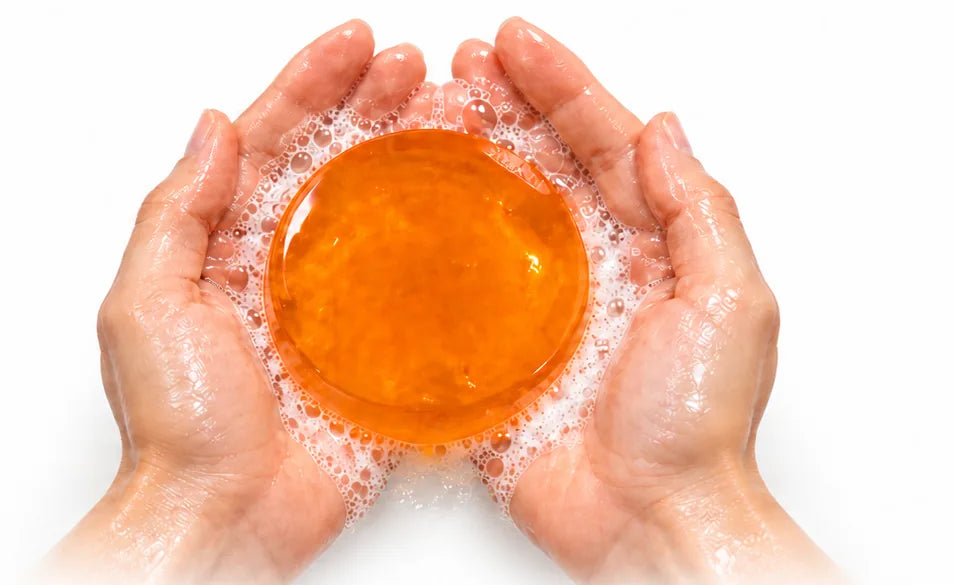
No soap is clinically proven to keep odor away all day, including ours. The Persimmon Body Bar is a cosmetic soap made to wash sweat and skin oils away, and it comes with a 60-day money-back guarantee so you can judge it for yourself.
Frequently asked questions
Why do I smell even though I shower every day?
Usually because bacteria start breaking down sweat again soon after you dry off, or because a few areas get rinsed without lather. Damp towels and clothes that hold odor can also put smell back onto clean skin.
Why can other people smell me when I can't?
Your nose adapts to smells it meets all the time, including your own. That is why a partner or friend may notice a change before you do.
Should I shower twice a day?
Usually there is no need. One thorough, gentle shower plus a quick wash of the hotspots when needed is kinder to skin than extra full showers.
Sources
- James AG, et al. Microbiological and biochemical origins of human axillary odour. FEMS Microbiology Ecology. 2013;83(3):527-540.
- Kimura K, et al. Measurement of 2-nonenal and diacetyl emanating from human skin surface employing passive flux sampler-GCMS system. Journal of Chromatography B. 2016;1028:181-185.
- Callewaert C, et al. Microbial odor profile of polyester and cotton clothes after a fitness session. Applied and Environmental Microbiology. 2014;80(21):6611-6619.
- Haze S, et al. 2-Nonenal newly found in human body odor tends to increase with aging. Journal of Investigative Dermatology. 2001;116(4):520-524.
- Saito K, Tokorodani Y, Sakamoto C, Kataoka H. Headspace solid-phase microextraction/gas chromatography-mass spectrometry for the determination of 2-nonenal and its application to body odor analysis. Molecules. 2021;26(19):5739.
- Shmerling RH. Showering daily: is it necessary? Harvard Health Publishing. 2021.
- American Academy of Dermatology. Dermatologists' top tips for relieving dry skin.
- American Academy of Dermatology. Hyperhidrosis: overview.
- MedlinePlus Genetics. Trimethylaminuria.